
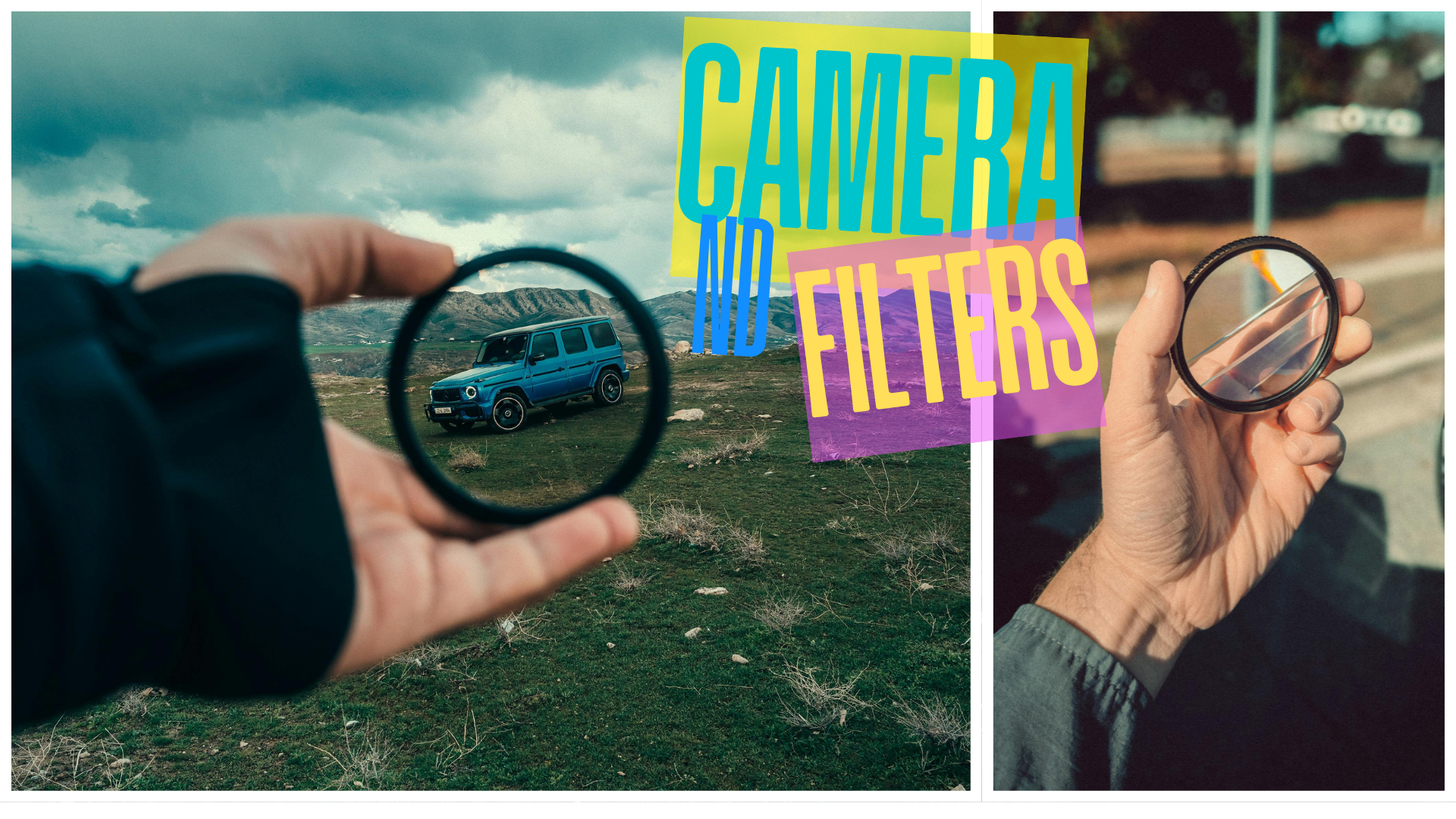
I started using ND filters as an experiment. Just curiosity, honestly. I shoot outdoors a lot, and on bright sunny days I kept fighting exposure settings to hold the look I wanted. After a while it stopped feeling like a test and became normal gear for me.
The Lightbulb moment phase (what changed)
This first phase was mostly trial and error. I was trying to protect my cinema shutter speed in bright outdoor scenes and still keep exposure under control.
My footage looked sharp, yes. But choppy. That pushed me into ND filters seriously.
How ND filters fixed my choppy 4K video
I started locking shutter for natural motion blur, then used ND to control exposure instead of changing shutter every few minutes. Once I did that, my 4K clips looked smoother to my eye. Same location. Same camera. Totally different feel.
ND Filter
ND filters gave me control I couldn’t get from camera settings alone when I wanted slow shutter. That’s really the point for me.
Why I even needed ND filters
If you are shooting in harsh daylight, light gets everywhere. You can lower ISO, increase shutter speed, close aperture, all that. I tried those combinations many times and yes, you can darken the image.
The issue appears when you want a low shutter speed.
For video, I usually want natural motion blur. For photos, sometimes I want creative blur – like moving subjects turning into streaks while the rest stays stable. On a sunny day, low shutter without ND just blows out fast.
That was my entry point. I wanted motion that looked natural. I kept getting overexposed frames instead.
What ND filters are
ND means Neutral Density.
ND filters are tinted glass in front of the lens that reduces the amount of light reaching the sensor. Neutral means colour should stay neutral, so the scene’s real colours don’t shift much.Eleanor Harris (American, 1901-1942)

That’s the idea anyway. Cheap filters can still tint a little in practice, I’ve seen that happen.
ND2, ND4, ND8, ND16 – what these numbers mean in real use
These numbers show filter density. Higher number = stronger tint = less light entering the camera.
ND2: very light reductionND4: mild reductionND8: stronger reductionND16: stronger again, useful in brighter conditions
In real shoots I don’t memorize theory. I look at the sun, check my target shutter, and pick the filter that lets me stay there without clipping highlights.
This part gets annoying because with fixed ND filters, you are physically swapping filters until it fits.
Neutral Density Chart
Here is a simple chart and use cases of different ND filters. A practical neutral density chart style guide that helps you decide fast.
ND4: mild sun, some cloud, moderate shutter reductionND8: bright day and I want controlled highlightsND16: very bright midday when I still want lower shutter10-Stop ND Filter: heavy light cut for strong long exposure photography effects
Check histogram and highlights after this first pick, then adjust. Works most of the time.
Fixed ND vs variable ND
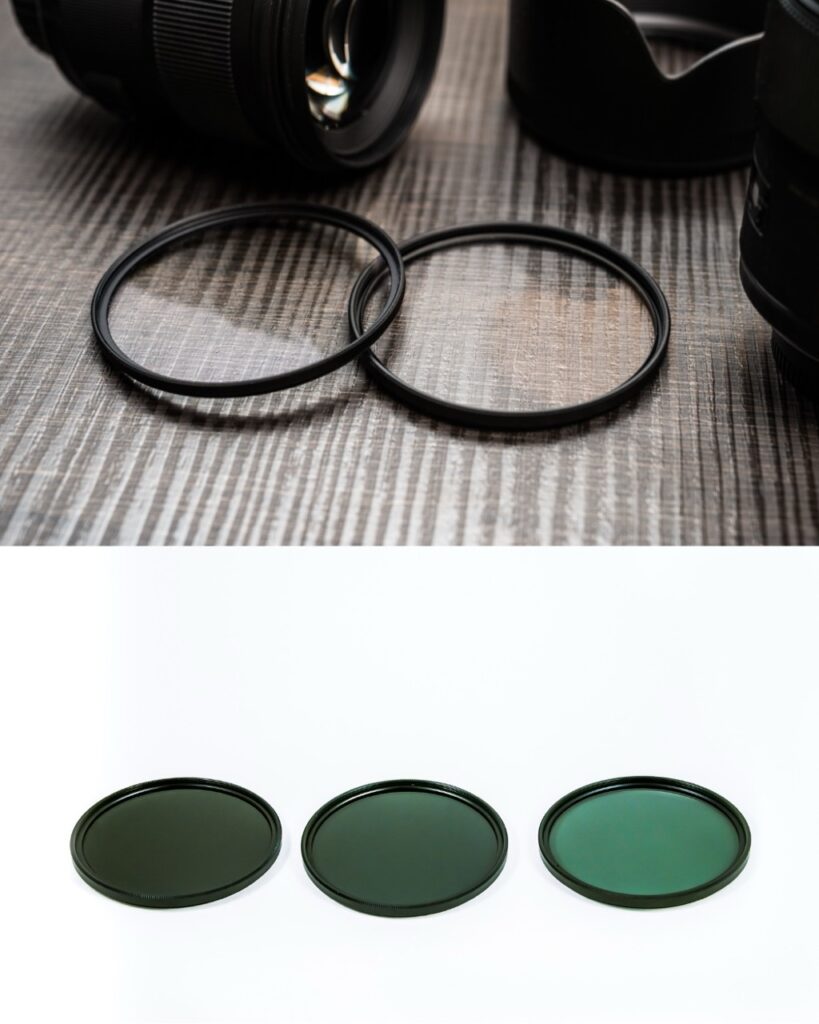
I use Neewer fixed ND filters right now with my Sony 16-35 f/4 lens.
They work. Image is good enough for my use, and I can get the slow shutter look in day time. But carrying multiple filters and changing them again and again during a shoot gets irritating. Dust, fingerprints, case management, checking threads. It piles up.
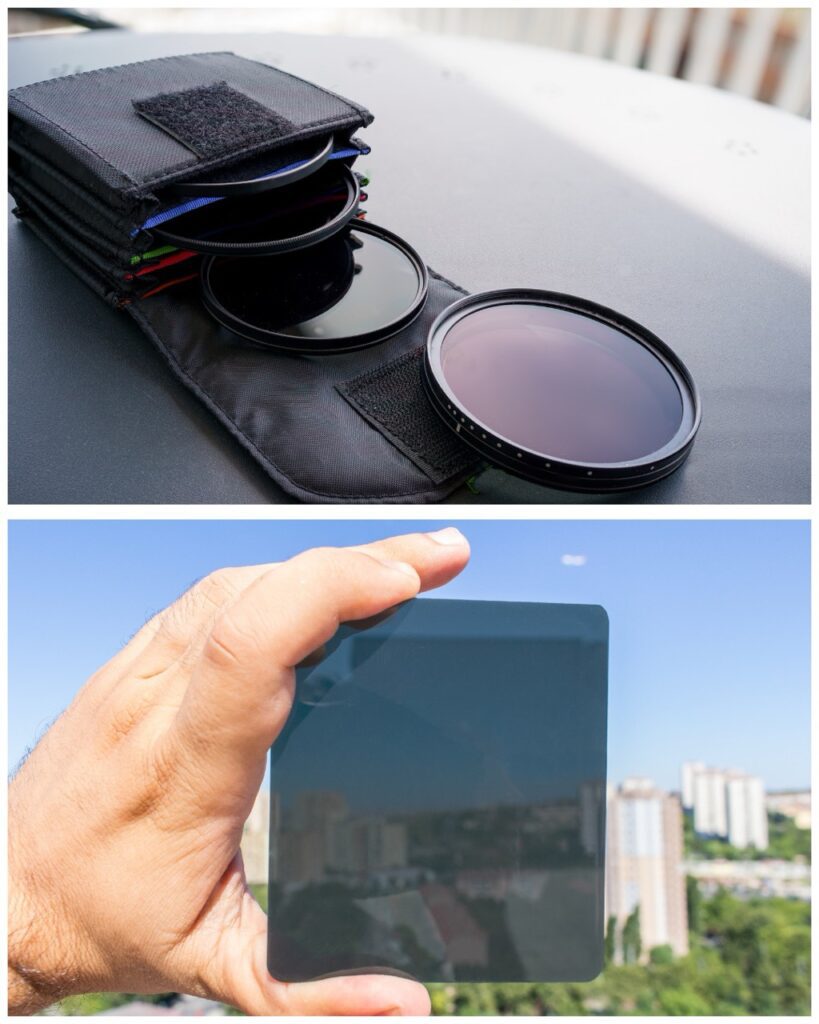
Variable ND solves a lot of that because one filter can cover a range. You rotate and adjust density based on current light.
Honestly, not having a variable ND is my biggest annoyance at the moment. If I buy one upgrade first, it will probably be that.
The real shooting problems and solution
Best ND filter for f4 lens in midday sun
For my style, fixed ND8 usually gets me close when using f/4 apertures in hard sunlight, then I fine-tune exposure with ISO and tiny aperture adjustments. In extreme sun, this is where a variable ND would save me time.
Variable ND filter X-pattern fix
I suggest avoid pushing variable ND to the very end of its range. That is where X-pattern risk gets higher. If you need deeper reduction, step to a stronger base ND instead of maxing one filter. I still need to test it once I get the variable ND filter.

Do I need an ND filter for 10-bit log video?
In bright daylight, yes in many cases. 10-bit log wants highlight room and consistent shutter behavior. ND helps hold that exposure without killing the motion feel.
Why my long exposure photos are turning blue (colour cast fix)
This issue appears with budget filters. Try custom white balance before shooting, mild tint correction in edit, and avoiding the cheapest glass when possible. Also, clean filters often because smudges make colour and contrast look worse than they are. Weirdly, that tiny cleanup step fixes more than people expect.
Internal ND filters: very practical, with one trade-off
Internal ND filters are built into the camera body, between lens mount path and sensor. Big benefit is obvious – one ND system works with different lenses, and you don’t care about front filter thread sizes every time.
So yes, very convenient in multi-lens workflows.
The trade-off is speed of change. External filters are right there on the lens. Internal ND control depends on camera design and can feel less immediate in some situations, especially if you’re constantly changing based on passing clouds or moving between shade and direct sun.
I still like the concept of internal ND a lot. For run-and-gun it makes huge sense.
One moment that changed my view
This train shot was taken in daylight I still remember.
I wanted the moving train to render as flowing lines, almost like painted motion, while keeping the scene composition readable. Midday light. Very bright. Without ND, impossible with my target slow shutter.
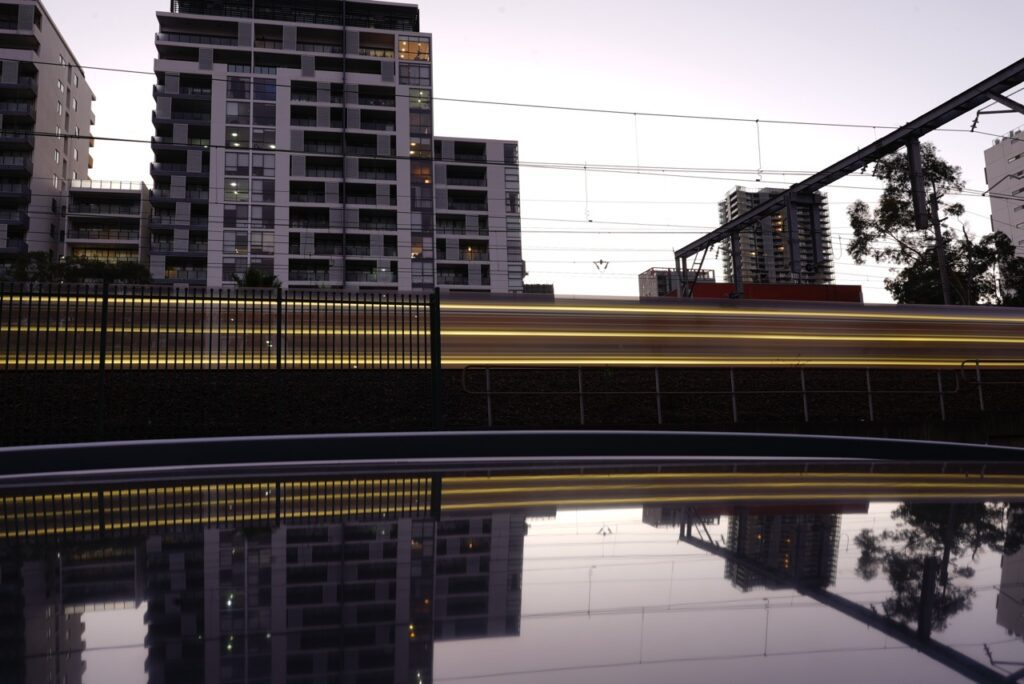
That was the moment ND filters stopped being optional gear in my head.
Day-to-day opinion after using ND filters for a while
I now use ND filters whenever conditions need it. Mostly bright outdoor filming days.
The biggest change for me is creative confidence. I don’t plan around “what exposure allows.” I plan around “what look I want,” then use ND so exposure supports that look.
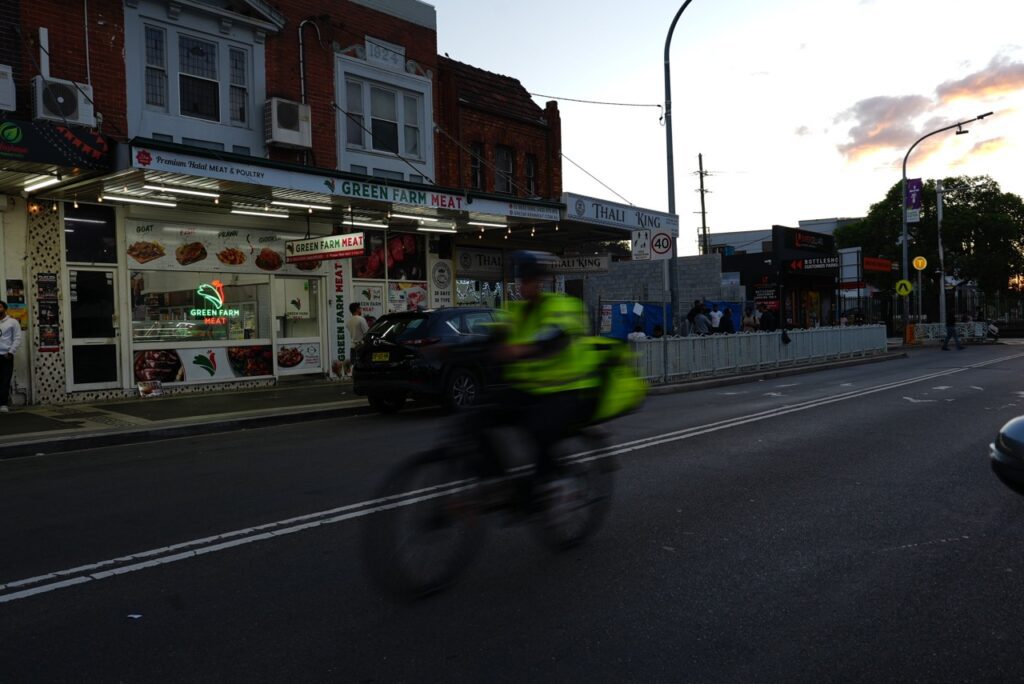
Small tangent, but true: once you start getting the motion blur look you imagined, regular high-shutter daylight footage feels a bit too crispy sometimes. Not always bad. Just less cinematic to my eye.
The Gear Lab phase (2026 buying decisions)
Magnetic vs screw-in ND filters for travel
Screw-in is cheaper and totally fine. I use it now. Magnetic filter systems are faster when moving between locations because swaps take seconds. For travel and run-and-gun, that speed matters more than I expected. Small thing, but when your hands are sweaty in the sun, fast swaps feel amazing.
Mist ND filters vs regular ND for cinematic look
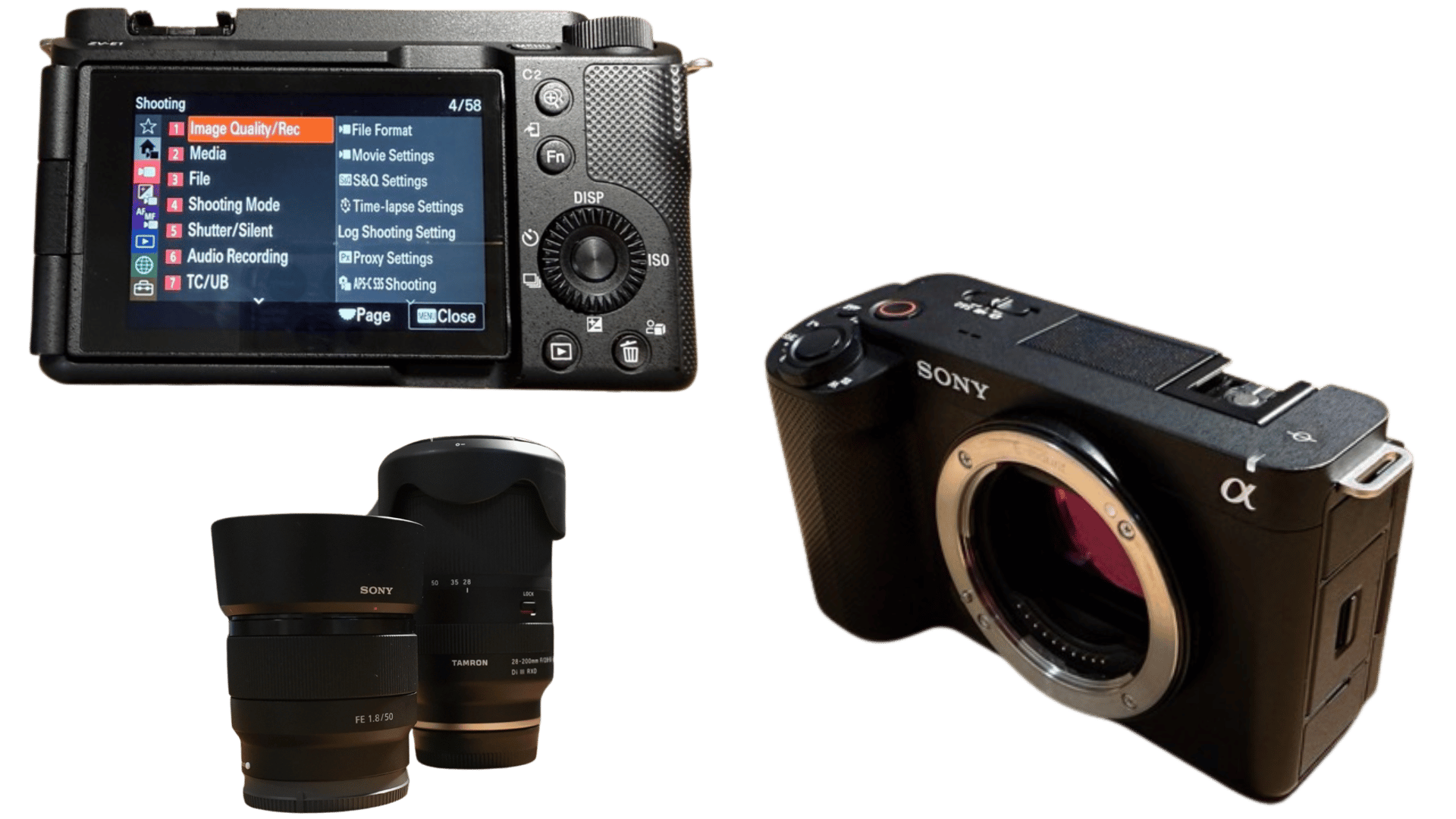
Regular ND controls light only. Mist ND adds glow and softer highlight roll-off depending on strength. I use regular ND when I want a clean image, mist ND when I want more mood straight out of my Sony ZV-E1 camera.
Where ND filters still fall short for me
- Managing multiple fixed ND filters is tedious.
- More gear to carry and maintain.
- Fast scene changes can slow you down if you must swap filters.
- Cheap filters can introduce color cast or softness.
So I recommend ND filters strongly, but I also recommend buying carefully and planning your setup around your actual shooting style.
Would I recommend ND filters?
Yes, definitely.
I highly recommend ND filters for bright light conditions when you want natural motion blur in video or creative blur in photos. They can look “extra” at first, then quickly feel essential once you start using them properly.
If you shoot outdoors in sunlight and care about motion rendering, ND filters are worth having from day one.
And if you’re deciding between multiple fixed NDs and one variable ND, I would seriously consider variable ND early. I learned that the hard way by carrying too many little filter cases. Still not proud of that filter pouch mess.