
Same sensor as the FX3, in a smaller body, for less money—but shoot LOG outdoors when it’s hot and the camera will shut down before you’re done. Six months in, that’s the trade I live with. This isn’t a spec list. It’s what actually changed how I shoot, what pissed me off, and who should walk away.
Quick verdict (for skimmers)
- Buy it if you’re a solo creator shooting video first, you don’t need an EVF (I don’t—it keeps the body small), and you’re not regularly filming long takes in hot outdoor conditions. Same 12MP full-frame as the FX3; AF and stabilisation let me leave the gimbal at home for most walking shots.
- Do NOT buy it if you need an EVF, shoot stills seriously, or you’re in a hot/humid climate and need a body that won’t overheat. You will regret it.
- Core truth: Perfect for vlogs and B-roll in controlled or mild conditions; unreliable when LOG + heat + outdoor combine. Battery has never been my problem (spare in the bag, USB when indoors). Overheating is.
6 months later — what actually matters
The 12MP sensor. I wanted a camera that didn’t force me to light every scene. In a dim café at ISO 6400 I get usable footage without fighting noise—same behaviour as the A7S III and FX3. The catch: 12MP stills are only good for thumbnails and social. The moment I needed a high-res still for a client I grabbed another camera. Do NOT buy the ZV-E1 if you need a real hybrid. It’s a video camera that can take a still, not the other way around.
Stabilisation. I stopped packing my gimbal for casual walking B-roll. Active mode handles a steady walk; Dynamic (or Dynamic Active) when I’m moving faster—Dynamic Active adds a 1.3x crop, so I plan framing for it. Anything beyond a brisk walk still looks jittery—I use the gimbal or accept the shake. So my kit changed: one less thing to carry most days, but the gimbal still lives in the bag for when I need smooth motion.
Product Showcase and Background Defocus. I thought they were gimmicks. Product Showcase actually works: hold something to the lens, it focuses on it; put it down, back on your face. I use it for product shots in the same take as talking head. Background Defocus is one press to open or stop down without touching the dial. Small features, but they’re in the way I shoot now.
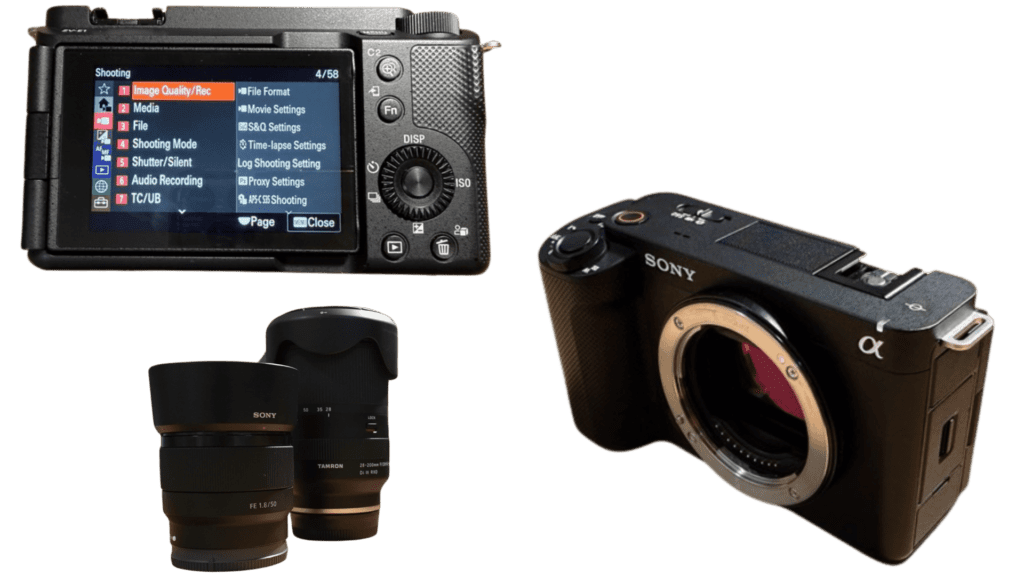
No EVF. I’m in the camp that it’s an advantage. No viewfinder = smaller body. For travel and self-video I don’t need an EVF; I’m facing the lens. The camera is built for vlogging, not stills—so an EVF would be dead weight. In bright sun the screen is readable with brightness up; for B-roll I cup it or find shade. The only people who’ll hate this are stills shooters. For them, this is the wrong camera anyway.
Real-world use: five situations that tell the story
1. Overheating stopped the shoot. Outdoor vlog in hot weather, shooting in LOG. Talking head and B-roll, screen on, Active stabilisation. I had a spare battery—power wasn’t the issue. The camera overheated and shut down. I had to stop and wait. In hot conditions, overheating is the limit. You’re not shooting, so battery is irrelevant. Indoors I’m on USB-C (charging, streaming, or recording to the Mac), so battery isn’t an issue there either. For runtime when you are shooting, see our ZV-E1 battery life real-world test.
2. Autofocus saved a take. Talking-head with a product in my hand, switching between my face and the product. I’d forgotten to turn Product Showcase on. Face/Eye AF held me sharp; when I brought the product up it hunted briefly then locked. One take, no reshoot. The rest of the time AF is just there—invisible. That day it actually saved me.
3. Wrong setting, bad first impression. My first few vlogs were with default stabilisation (Standard). Walking shots looked shaky and I thought the camera was overhyped. I switched to Active for handheld and left it there. Night and day. Now I use Standard only when the camera is on a tripod or gimbal. If stabilisation feels weak, check you’re not in Standard. More in our best ZV-E1 settings guide.
4. Wrong tool: the wedding. A friend asked me to shoot their wedding—mostly stills, some clips. I took the ZV-E1. No EVF in bright daylight made composition annoying; 12MP was a hard ceiling for prints and cropping; one card slot made me nervous for a one-chance event. I delivered usable work but I should have used a hybrid with an EVF and two slots. The ZV-E1 is a content camera. Do NOT use it as your only body for events or stills-heavy work.
5. 4K 120p crop bit me. I’d framed a wide at 24p, then switched to 120p (S&Q mode) for a slow-mo moment without moving. The ZV-E1’s 4K 120p has a slight ~1.1x crop (and needs the free firmware from Sony Creators’ Cloud). That crop cut the edges and killed the composition. I had to redo the shot. 4K 60p/50p is full-frame with no crop—only 120p/100p has the small crop. Now I either frame for the crop at 120p or use 60p when I want full width in slow-mo. See ZV-E1 vs A7C II vs FX3 for how other bodies handle it.
[VIDEO: 30–60 sec B-roll — handheld walking with Active stabilisation, or Product Showcase face/product switch. Caption: ZV-E1 handheld stabilisation / Product Showcase.]
What annoyed me
Overheating in hot conditions. Battery has never been the main issue. I carry a spare; indoors the camera is on USB-C (charging, streaming, or recording to the Mac). The real limit is overheating when you’re in LOG outdoors in hot weather. When it goes, the camera stops you. Indoors with AC it’s fine unless the room is already hot or you’re in a hot/humid region. If you shoot in heat regularly, this camera will frustrate you. Do NOT buy it for that. Plan for cooldown breaks or get a body with better heat handling (e.g. FX3).
Single card slot. I don’t use this camera for weddings or one-chance paid events. For YouTube and personal work I accept it. For anything where you can’t afford to lose a card, it’s a hard no.
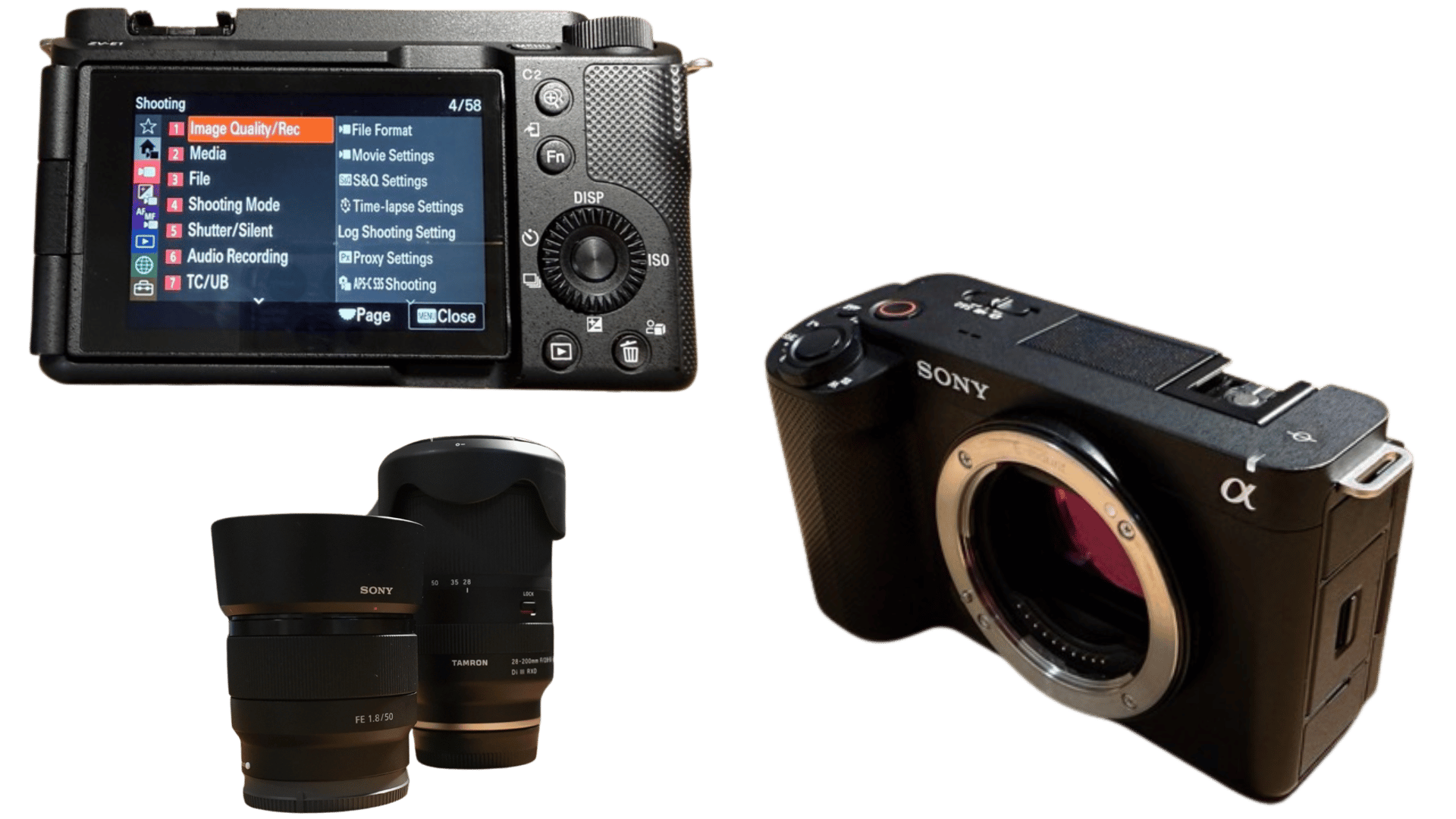
Menu and customisation. Still Sony: deep menus, too many options. I spent an hour on Fn and My Menu so I rarely dig. Out of the box it’s not pick-up-and-shoot for someone new to Sony.
120p crop and Dynamic Active. 4K 60p/50p is full-frame (no crop). 4K 120p/100p has a slight ~1.1x crop and requires the free firmware upgrade; use S&Q for 120p. Dynamic Active Stabilization adds a 1.3x crop (works with 60p, not 120p). Long 120p can add heat—no mechanical fan. You have to remember which mode has crop or you’ll wreck a shot.
What surprised me
How much I use Product Showcase. I wrote it off as a vlogger toy. I use it every time I’m showing something to the camera—no separate product shot, no reframe.
S-Cinetone and edit time. I don’t grade most vlogs. S-Cinetone gets me close; a quick contrast/curve pass and I’m done. That’s hours saved in the edit. When I want to grade properly I use S-Log3—but for fast turnaround, S-Cinetone is why I’m not fighting the image.
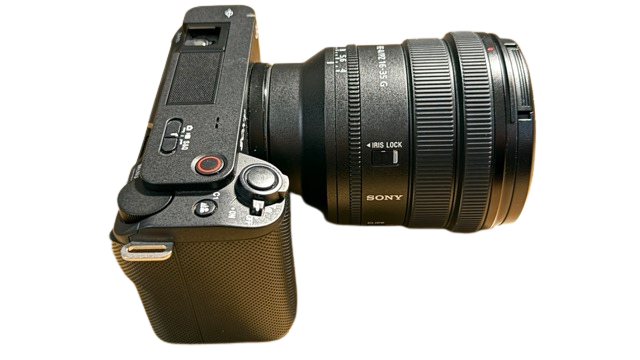
Grip and lens weight. The body is small. With a 24–105 or a heavy prime I added a small cage for something to hold. With a 20mm or 35mm it’s fine. Handling depends on the lens. See ZV-E1 accessories I actually use.
Who this camera is NOT for
- Stills-first or 50/50 hybrid shooters. No EVF, no mechanical shutter, 12MP only. You will be frustrated. Get an A7C II or another high-res hybrid.
- People who shoot long takes outdoors in hot or humid conditions (especially in LOG). Overheating will stop you. If you’re in a hot climate or travel there often, get a body with better heat management or accept cooldown breaks.
- Event or wedding shooters who need reliability. One card slot and overheating in hot venues = risk. Use a dual-slot, EVF body.
- Anyone who needs full-frame width at 120p or with Dynamic Active. 4K 60p is full-frame; 120p has a ~1.1x crop and Dynamic Active adds 1.3x. If your style is “always 120p slow-mo and I need every pixel of width,” you’ll feel the crop.
- Anyone who hates menu diving. Sony’s menu is what it is. The ZV-E1 is simpler than an A7, but it’s not a point-and-shoot.
Alternatives (positioning, not specs)
ZV-E1 vs A7C II. A7C II = EVF, mechanical shutter, 33MP. You lose Product Showcase, Background Defocus, and the video-first layout. Get the A7C II if stills matter and you want one body for both. Get the ZV-E1 if video is 80%+ of what you do. We break it down in ZV-E1 vs A7C II vs FX3.
ZV-E1 vs FX3. Same sensor, different body. FX3 has cooling, mounting, cinema build. ZV-E1 is smaller, cheaper, for solo creators. Building a rig and need robustness → FX3. One lens and a mic, run-and-gun → ZV-E1 saves money.
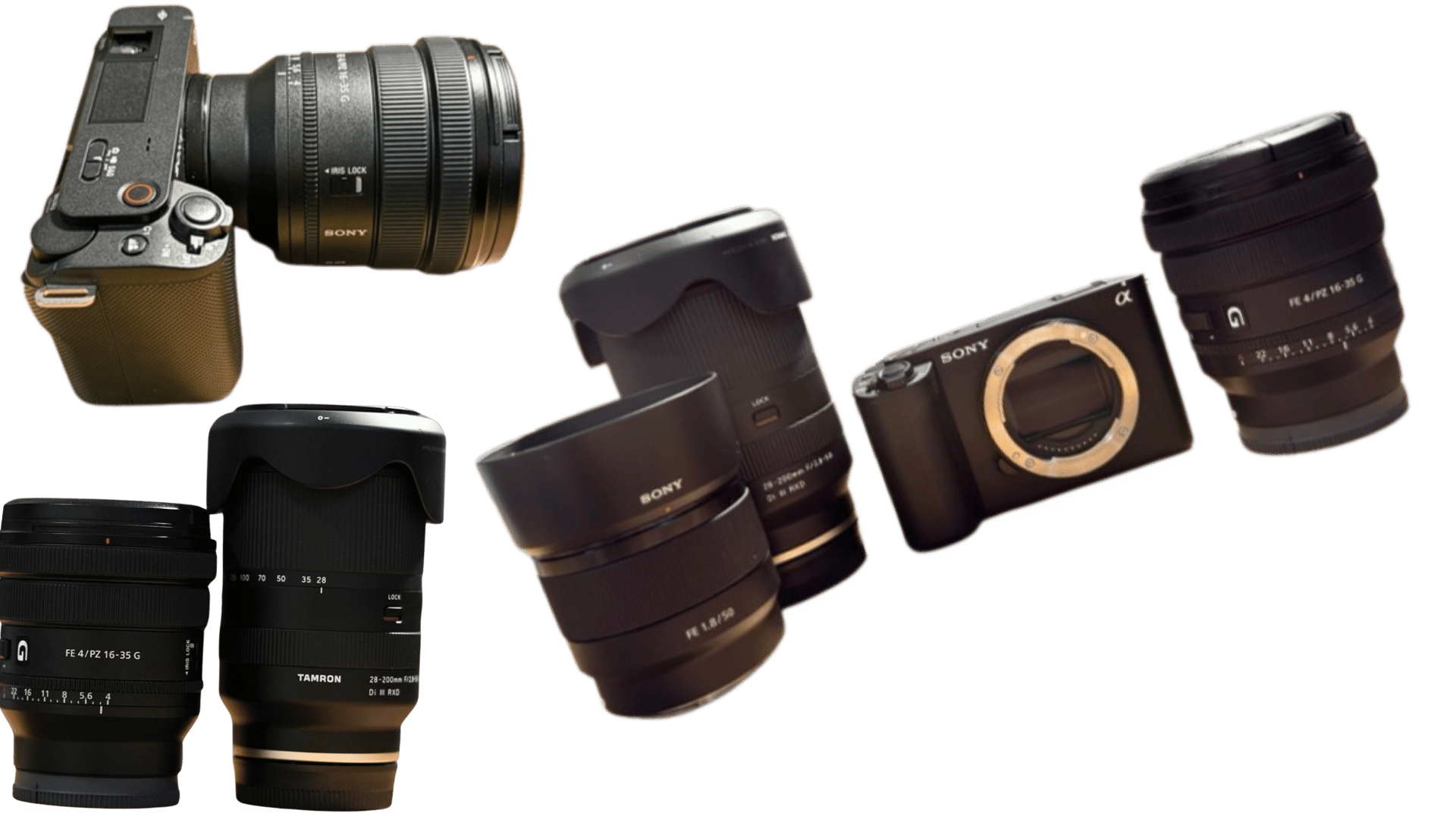
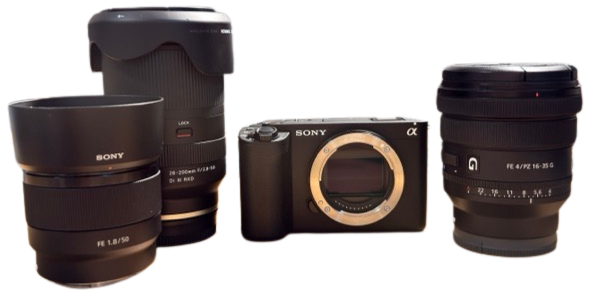
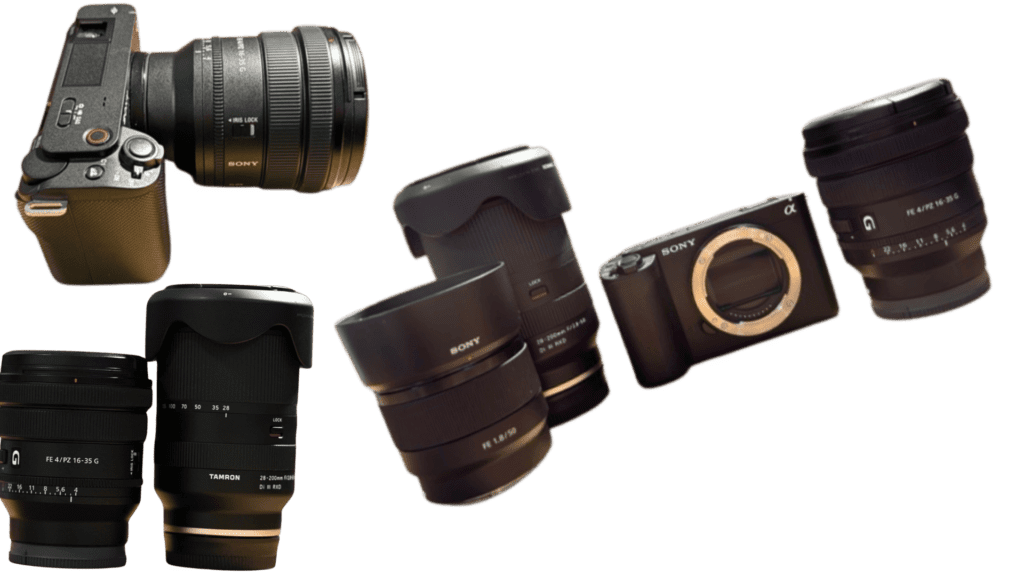
Lens pairing. 12MP doesn’t demand the sharpest glass for 4K, but you see good glass in grading and bokeh. I use a small set of primes and one zoom—see best lenses for ZV-E1 and best prime for ZV-E1. Heavy zooms make the body front-heavy; compacts (20mm, 35mm, 28–60) balance better.
Regret test: would I buy this again with my own money?
Yes. For my use.
I’d buy it again because it does what I need: one compact full-frame for vlogs and B-roll, AF and stabilisation that mean I don’t need a gimbal for most shots, and an image that holds up in low light and in the edit. Battery isn’t the issue—spare in the bag, USB indoors. Overheating in hot outdoor LOG is the limit; I work around it (shade, shorter takes, S-Cinetone when I don’t need LOG). Single slot and the 120p/Dynamic Active crop are manageable. If I had to replace it tomorrow and my use case didn’t change, I’d get another ZV-E1 (or its successor).
I would not buy it again if my work shifted to events, weddings, or 50/50 stills and video—or if I were regularly shooting long outdoor takes in heat. In those cases I’d want an EVF, two slots, better heat management, or a different tool. Buy it for this use; not for every use.
Final verdict
The ZV-E1 is a focused tool. Same sensor as the FX3, smaller and cheaper, but it will overheat in LOG when it’s hot outside. For solo creators who shoot video first and accept that trade—plus one slot and the small 120p/Dynamic Active crop when you use them—it’s one of the best value full-frame options. Battery has never been my issue with a spare and USB indoors. For everyone else there’s a better fit: A7C II for hybrid, FX3 for cinema and heat.
I use it as my main camera because my work is vlogs and B-roll, not stills or events. If that’s you, pair it with a lens you’ll actually carry (lens guide) and a decent mic (accessories). If not, pick the camera that matches what you really do.
Media checklist (replace before publish)
| # | Type | Placeholder | Suggested content |
|---|---|---|---|
| 1 | Image | After title | Hero: ZV-E1 on desk or in hand |
| 2 | Image | After Quick verdict | ZV-E1 with lens (20mm or 24–105) |
| 3 | Image | After “6 months later” | LCD/menu (Picture Profile or stabilisation) |
| 4 | Video | After “Real-world use” | B-roll: handheld or Product Showcase (30–60 sec) |
| 5 | Image | After “What annoyed me” | Spare battery + gear, or outdoor/cooldown |
| 6 | Image | After “What surprised me” | ZV-E1 with cage + mic |
| 7 | Video | After “What surprised me” | S-Cinetone vs S-Log3 (30–90 sec) |
| 8 | Image | After “Alternatives” | Optional: ZV-E1 vs A7C II / FX3 |
| 9 | Image | Before CTA | Optional: ZV-E1 in bag / ready to go |
2 thoughts on “Sony ZV-E1 Review: 6 Months of Real Use”